
Exploring small-holder farmers’ adaptation strategies under soil salinity impacts in coastal areas of Bangladesh
Category:- Journal; Year:- 2024
Discipline:- Environmental Science Discipline
School:- Life Science School
Abstract
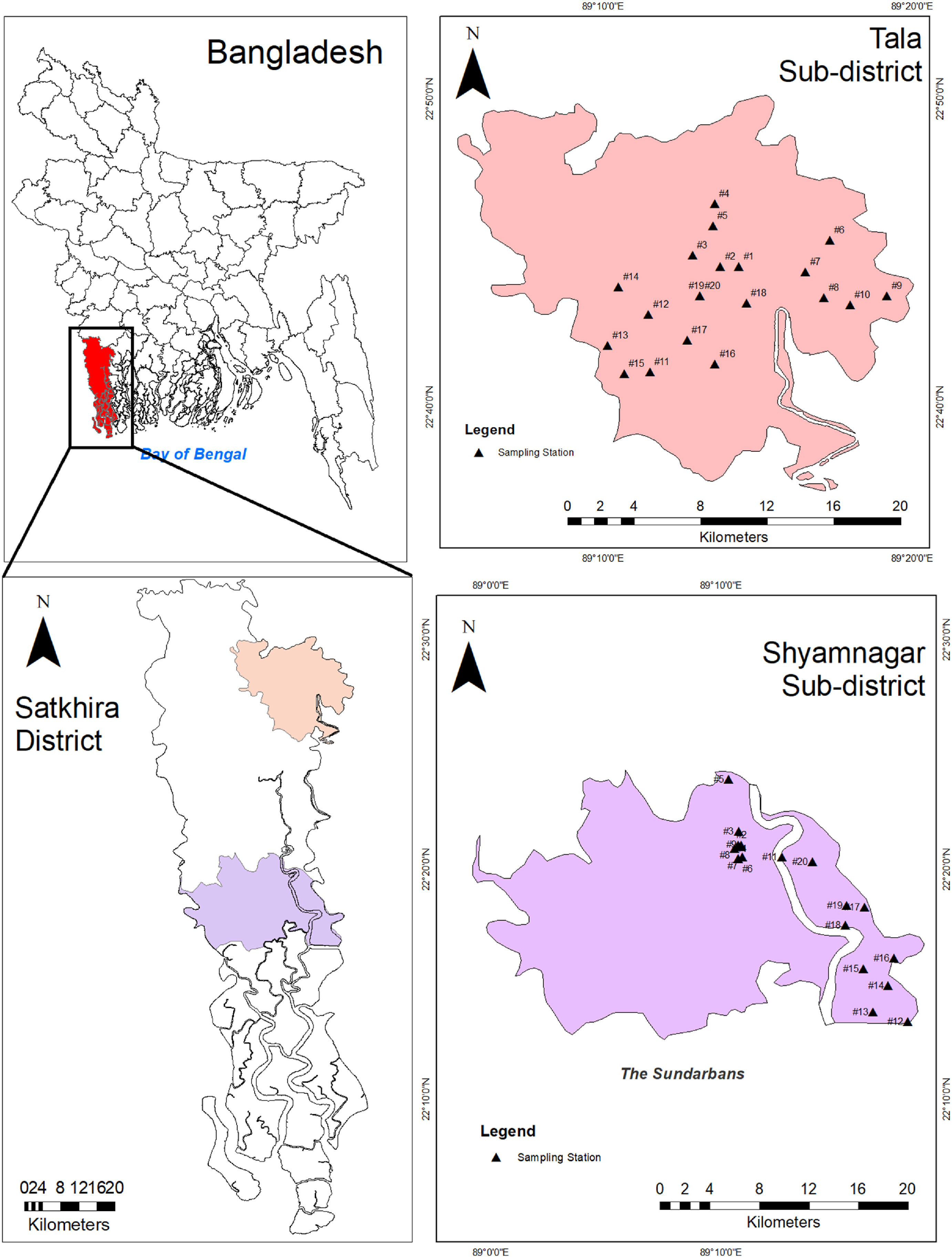
Soil salinization, one of the primary causes of soil degradation, negatively impacts crop production, threatening the livelihoods of resource-constrained small-holder farmers in climate-vulnerable coastal areas. Understanding farmers' perceptions and adaptation strategies are important for building adaptation plans. Therefore, this study was conducted to assess the status of soil salinity and to investigate small-holder farmers' perceptions of the impacts of soil salinity and their adaptation strategies. The study was carried out in two coastal sub-districts in Bangladesh's Satkhira district: Tala and Shyamnagar. A total of 222 small-holder farmers were surveyed, and 40 soil samples were collected to determine the current status of salinity levels. Descriptive statistics, such as average and percentage, trend analysis using linear regression, and chi-square test, were used to analyze the data. In addition, a total of four focus group discussions and five key informant interviews were conducted in January–February 2018 to gain better insights and cross-referencing findings from the survey. The results showed that the soil salinity in the study areas increased over time. The average value of soil electrical conductivity in Tala sub-district was 1.50 dS/m, while it was 11.44 dS/m in Shyamnagar sub-district. Majority of the farmers in Shyamnagar sub-district, a highly salt-affected area, perceived that salinity had a significant negative impact on crop production, freshwater availability for irrigation, irrigation water cost, crop area, plant height, and crop size. Adaptation strategies differed between locations. Astonishingly, majority of the farmers in highly saline-prone areas were in the low adaptation category, whereas farmers in slightly saline-prone areas were in the medium adaptation category. A lower adaptation by farmers despite facing higher soil salinity could be due to lower educational status, use of surface water, and lack of access to information and training. Therefore, our study highlights the need for targeted, location-specific strategies to enhance the resilience of coastal agricultural systems in Bangladesh, offering key insights for salinity adaptation planning.
Read More