
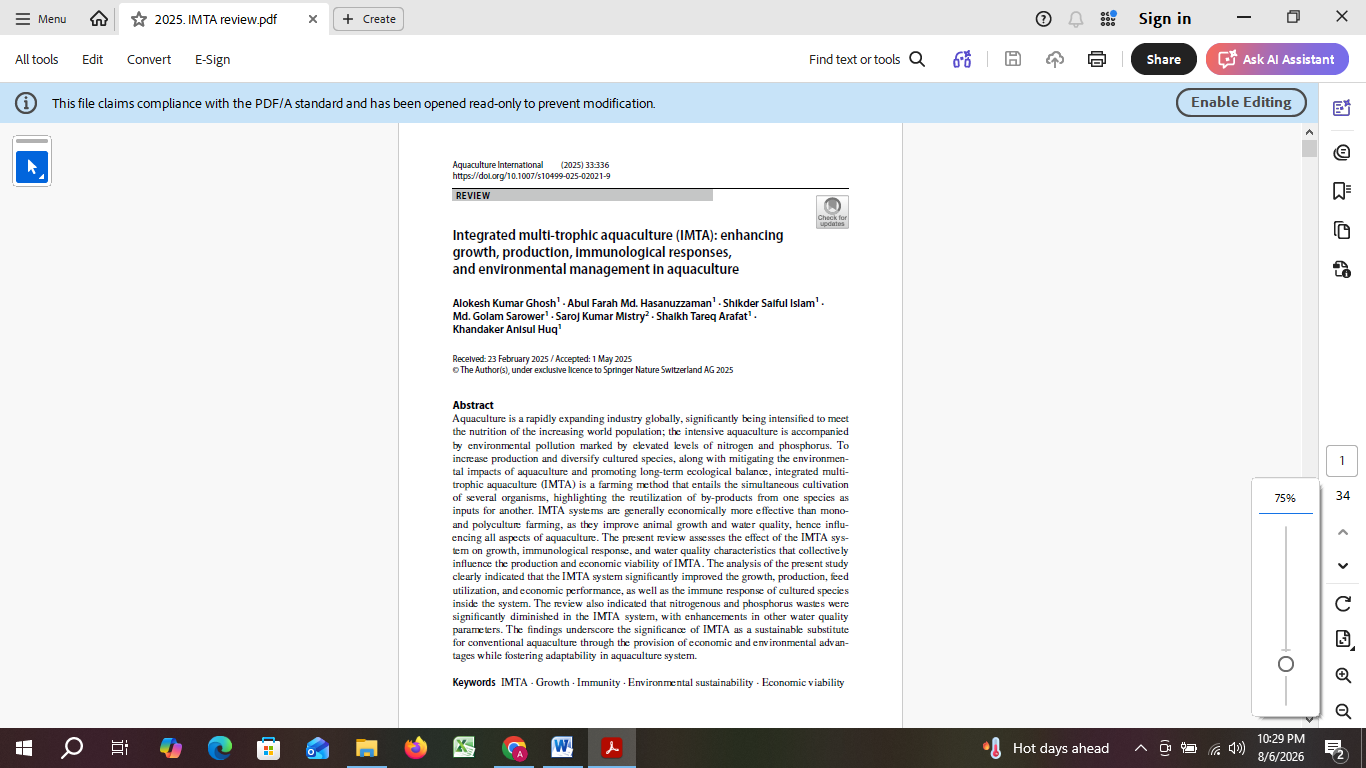
Integrated Multi-Trophic Aquaculture (IMTA): Enhancing Growth, Production, Immunological Responses and Environmental Management in Aquaculture
Category:- Journal; Year:- 2025
Discipline:- Fisheries & Marine Resource Technology Discipline
School:- Life Science School
Abstract
Aquaculture is a rapidly expanding
industry globally, significantly being intensified to meet the nutrition of the
increasing world population; the intensive aquaculture is accompanied by
environmental pollution marked by elevated levels of nitrogen and phosphorus.
To increase production and diversify cultured species along with mitigating the
environmental impacts of aquaculture and promote long-term ecological balance,
Integrated Multi-Trophic Aquaculture (IMTA) is a farming method that entails
the simultaneous cultivation of several organisms, highlighting the
reutilization of by-products from one species as inputs for another. IMTA
systems are generally economically more effective than mono- and polyculture
farming, as they improve animal growth and water quality, hence influencing all
aspects of aquaculture. The present review assesses the effect of IMTA system
on growth, immunological response, and water quality characteristics that
collectively influence production and economic viability of IMTA. The analysis
of the present study clearly indicated that IMTA system significantly improved
the growth, production, feed utilization and economic performance, as well as
the immune response of cultured species inside the system. The review also
indicated that nitrogenous and phosphorus wastes were significantly diminished
in the IMTA system, with enhancements in other water quality parameters. The
findings underscore the significance of IMTA as a sustainable substitute for
conventional aquaculture through the provision of economic and environmental
advantages while fostering adaptability in aquaculture system.