
Molecular characterization and aflatoxin biosynthetic gene profiles of Aspergillus flavus associated with maize and chili in Bangladesh
Category:- Journal; Year:- 2026
Discipline:- Agrotechnology Discipline
School:- Life Science School
Abstract
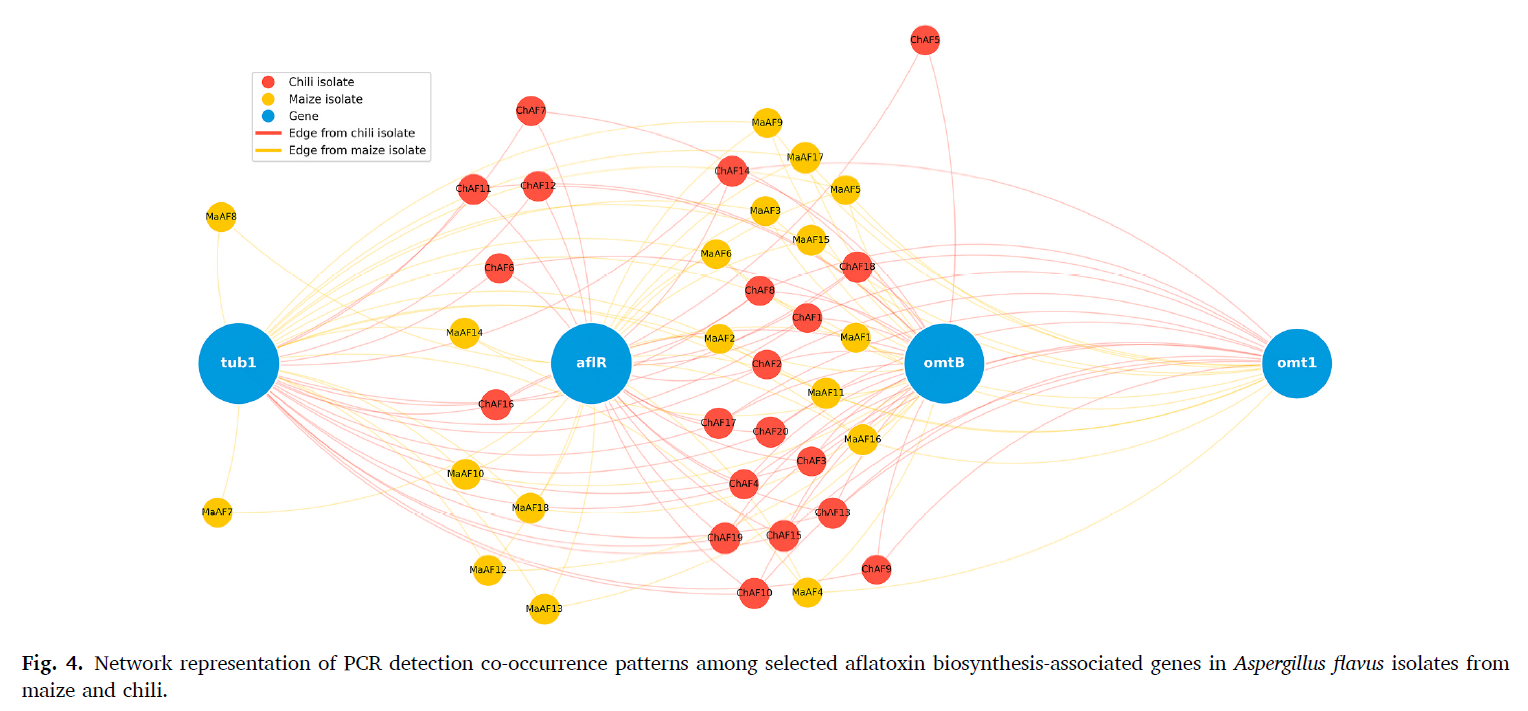
Aflatoxin contamination caused by Aspergillus flavus represents a serious food safety threat in tropical agroecosystems. This study examined the genetic diversity, population structure and geographical distribution of the mycotoxin biosynthetic gene clusters in A. flavus isolates associated with maize (Zea mays L.) and chilli (Capsicum annuum L.) from Bangladesh. Thirty-eight isolates were evaluated for morphological features, confirmed by ITS sequencing, genotyped based on SSR markers and determined via PCR analysis of four major aflatoxin pathway genes (aflR, aflP/omt1, aflO/omtB and tub1). Morphological analyses under multiple incubation and observation conditions revealed substantial phenotypic plasticity, with limited genetic relationships, highlighting strong environmental influences on colony traits. ITS sequencing confirmed all isolates as A. flavus. Gene profiling demonstrated widespread detection of the regulatory gene aflR and the housekeeping gene tub1, whereas the structural gene aflP showed marked variability across hosts and districts, suggesting possible variation within aflatoxin biosynthetic gene regions in a subset of isolates. Genetic diversity of the maize- and chili-associated populations was high, and differentiation between them was low as confirmed by SSR-based analyses. STRUCTURE revealed three genetic clusters (K = 3) at which there was high admixture, suggesting subtle population structure and allele sharing among hosts and regions. These results indicate widespread detection of the regulatory gene aflR together with variable amplification patterns of selected aflatoxin biosynthesis-associated genes that may be associated with host type and geographic origin. Integration of population genetic analyses with aflatoxin biosynthesis-associated gene profiling provides baseline molecular information for future monitoring of A. flavus populations and development of crop-specific surveillance strategies.
Read More